Rescued from the Archives: The Artists Breathing New Life into Forgotten Pin-Up Photography
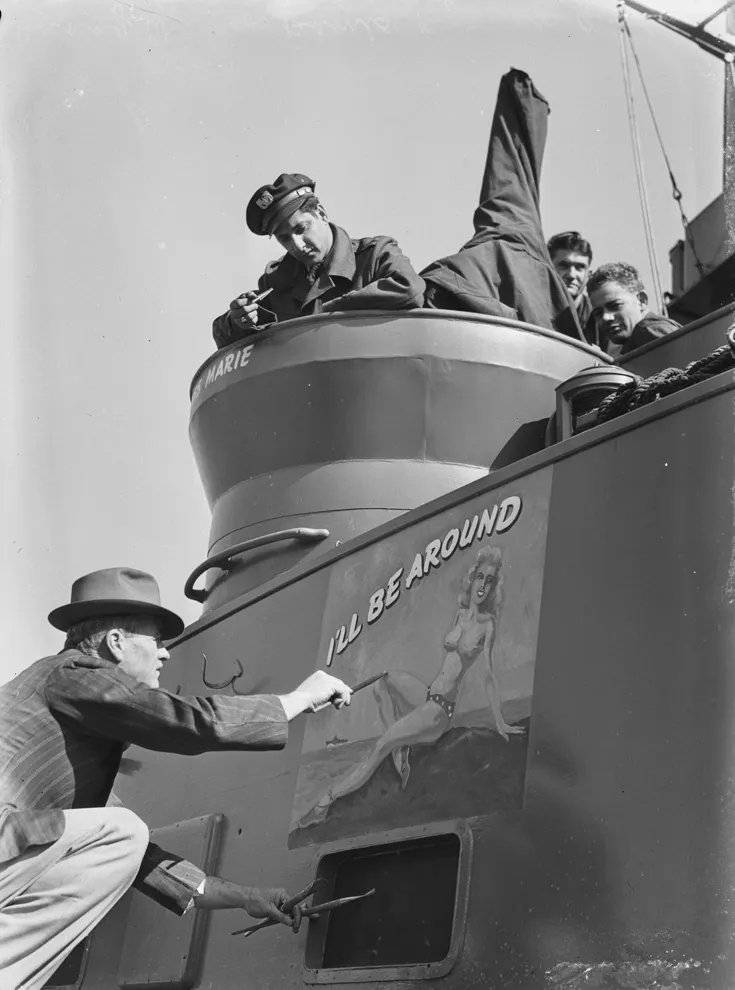
Photo: Alec Iverson, Public domain, via Wikimedia Commons
There's a photograph sitting in a private collection somewhere in Ohio. It's a gelatin silver print from around 1948, slightly warped at the corners, its edges browning like an old paperback left in a sunny window. The woman in the frame is mid-laugh, one leg kicked up behind her, a polka-dot halter top catching the studio light just right. She is radiant. She is also, in the photograph's current state, barely visible beneath a film of oxidation and time.
That photograph — and hundreds of thousands like it — is exactly what a growing community of digital archivists, colorists, and restoration artists are racing to save.
Why Pin-Up Photography Is in Danger
Vintage pin-up photography occupies a strange place in the cultural record. It was wildly popular in its heyday — the 1940s and '50s saw pin-up imagery plastered on everything from nose art to novelty calendars — but it was rarely treated as fine art worth preserving. Studios discarded negatives. Magazines pulped back issues. Private collectors stored prints in conditions that were, to put it generously, not archival.
The result is a fragmented visual history. We know the big names — Bunny Yeager, Peter Driben, Gil Elvgren — but enormous swaths of commercial pin-up photography from the mid-20th century exist only in deteriorating physical form, if they exist at all.
"People think of preservation as a museum problem," says one independent archivist who specializes in mid-century commercial photography. "But so much of this material never made it into museums in the first place. It was considered lowbrow. Now we're scrambling to catch up before it's gone entirely."
The Digital Darkroom: What Restoration Actually Looks Like
Modern photo restoration is part science, part artistic interpretation, and part historical scholarship. It starts with high-resolution scanning — often at resolutions that would make your laptop weep — and moves into software like Adobe Photoshop, Lightroom, and increasingly, AI-assisted tools like Topaz Photo AI and Remini that can reconstruct missing detail from damaged areas.
But the technical side is almost the easy part.
"The real work is the research," explains a digital colorist based in Portland who has spent the last four years colorizing black-and-white pin-up photographs for collectors and small archives. "When you're adding color to a grayscale image, every single choice has to be defensible. What color was that sweater? What shade were the walls of that studio? You're making hundreds of micro-decisions, and if you're not grounded in the period, you'll get it wrong."
Getting it wrong, in this context, means anachronism — slapping a shade of highlighter-pink onto a 1952 photograph that simply didn't exist in that Pantone family yet. Serious colorists cross-reference period fabric swatches, vintage cosmetics advertisements, and studio photography records to make educated, historically informed choices. Some even consult with fashion historians.
The results, when done well, are genuinely transformative. A washed-out, scratched black-and-white print becomes a vivid window into a specific cultural moment. The woman in the polka-dot halter top stops being a relic and starts being a person.
AI Is Changing the Game — For Better and Worse
Artificial intelligence has arrived in the restoration space with the subtlety of a freight train, and opinions are divided. Machine learning tools can now upscale low-resolution images with remarkable accuracy, reconstruct damaged facial features, and even generate plausible detail in areas where the original photograph is simply gone.
For archivists working with extremely degraded material, this is genuinely exciting. For purists, it raises uncomfortable questions.
"There's a meaningful difference between restoring a photograph and generating a new one," one archivist argues. "When AI fills in a missing section of a face, it's not recovering what was there — it's inventing something. That's a different activity, and we should be honest about it."
The ethical considerations don't stop at accuracy. Vintage pin-up photography frequently features women whose identities are unknown — models who were never credited, who may or may not have consented to wide distribution of their images, and whose descendants may have complex feelings about seeing grandma's pin-up photos suddenly circulating on social media in vivid color.
Responsible practitioners in this space are increasingly vocal about these concerns. Many restoration artists now include detailed provenance notes with their work, flagging which elements were reconstructed versus recovered, and some actively research the identities of uncredited models to ensure credit is given where it's due.
Making the Past Relevant Without Flattening It
The most interesting tension in the restoration world isn't technical — it's curatorial. Once you've brought a vintage pin-up photograph back to life, what do you do with it?
Some archivists are strict preservationists: restore, document, store. Others see digital restoration as an opportunity for recontextualization, presenting these images alongside historical commentary that acknowledges both their cultural significance and the complicated power dynamics that shaped them.
"Pin-up culture was genuinely joyful for a lot of the women involved," says one researcher who has spent years interviewing surviving models from the golden age of pin-up photography. "But it also existed within a specific set of constraints. Good restoration work honors both of those truths. It doesn't sanitize the history, and it doesn't reduce these women to victims either."
For audiences at Pin-Up 365, this ongoing work matters because it directly shapes what vintage content is available and how it's framed. The photographs being rescued today are the visual heritage that informs everything from contemporary retro-themed shoots to the aesthetic sensibilities of modern pin-up communities.
Where to Follow the Work
If you want to see vintage restoration in action, a handful of Instagram accounts and YouTube channels have built substantial followings around the process, posting before-and-after comparisons that are genuinely jaw-dropping. Organizations like the Digital Public Library of America and various university special collections are also digitizing mid-century commercial photography at scale, making previously inaccessible material available to researchers and enthusiasts alike.
The woman in the polka-dot halter top deserves to be seen. Fortunately, there are people working every day to make sure she is.