Pixels Meet Petticoats: How Today's Photographers Are Reinventing the Pin-Up Shoot
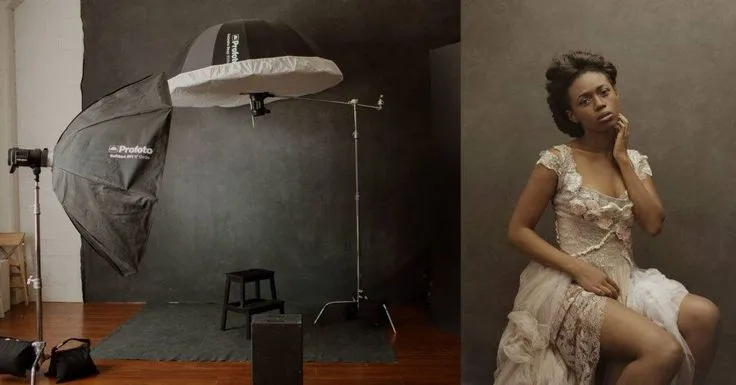
Photo: photographer studio vintage pin-up photo shoot retro model digital camera lighting setup, via i.pinimg.com
Somewhere in a converted garage in Austin, a photographer named Dani is setting up a shoot. She's got a ring light, a vintage chaise lounge sourced from an estate sale, a model in a 1950s-style bullet bra and high-waisted shorts, and a mirrorless camera that costs less than a used car. In three hours, she'll have edited images that — depending on her workflow choices — could look like they were pulled from a 1952 issue of a men's magazine, or like something entirely new: vintage in spirit, unmistakably contemporary in execution.
This is what pin-up photography looks like in 2024. And it's a genuinely interesting moment for the genre.
The Original Craft: What Made Classic Pin-Up Photography What It Was
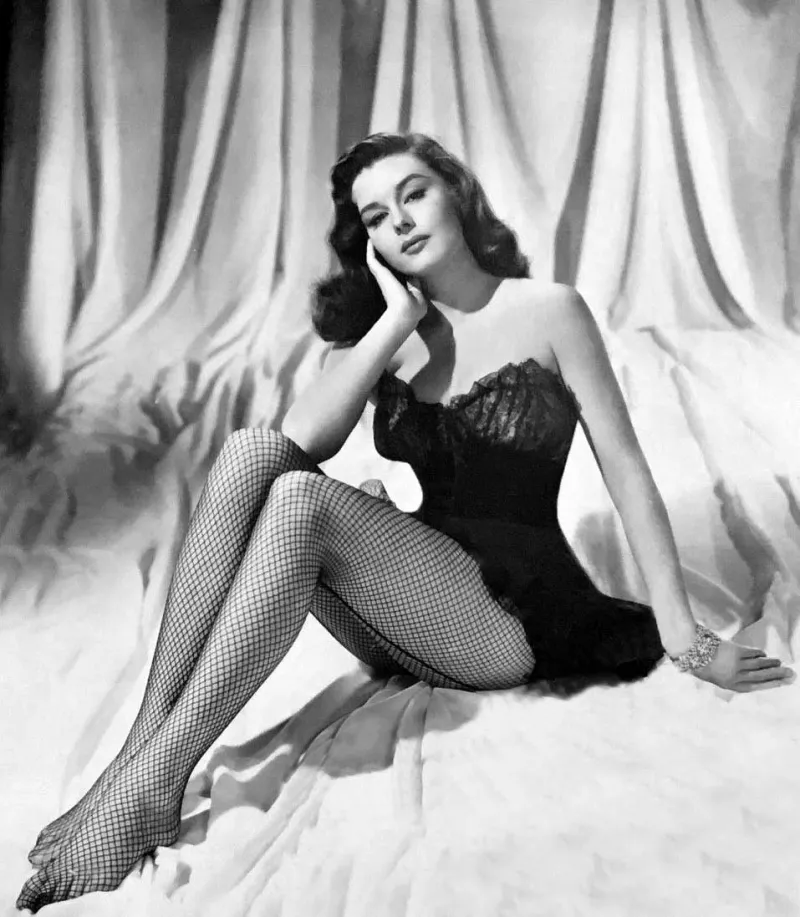
To understand where pin-up photography is going, it helps to appreciate what made it distinctive in the first place. The golden era — roughly 1940 through the early 1960s — was defined by constraints as much as creativity. Film had limited dynamic range, meaning photographers had to work carefully with light to avoid blowing out highlights or losing shadow detail. Studio flash equipment was bulky, expensive, and required technical expertise to operate safely.
The photographers who became legends in this space — men like Bunny Yeager in Miami, who shot a young Bettie Page with an almost documentary intimacy, or the studio photographers working for magazines like Playboy in its early years — developed their signature styles partly through solving problems. How do you make skin look luminous on Kodachrome? How do you create depth and dimension in a relatively flat studio setup? How do you direct a model to look relaxed and spontaneous when she's been under hot studio lights for two hours?
The answers to those questions became the visual language of the genre. Soft directional lighting from slightly above. A reflector below to fill shadows under the chin and eyes. Poses that created curves and implied ease even when the technical requirements of the shot were anything but easy.
Enter the Digital Age: What Changed, and What Didn't
Digital photography didn't arrive all at once — it crept in through the 1990s and early 2000s, gradually becoming the professional standard as sensor technology improved and the cost of digital bodies came down. For pin-up and glamour photographers, the transition was complicated.
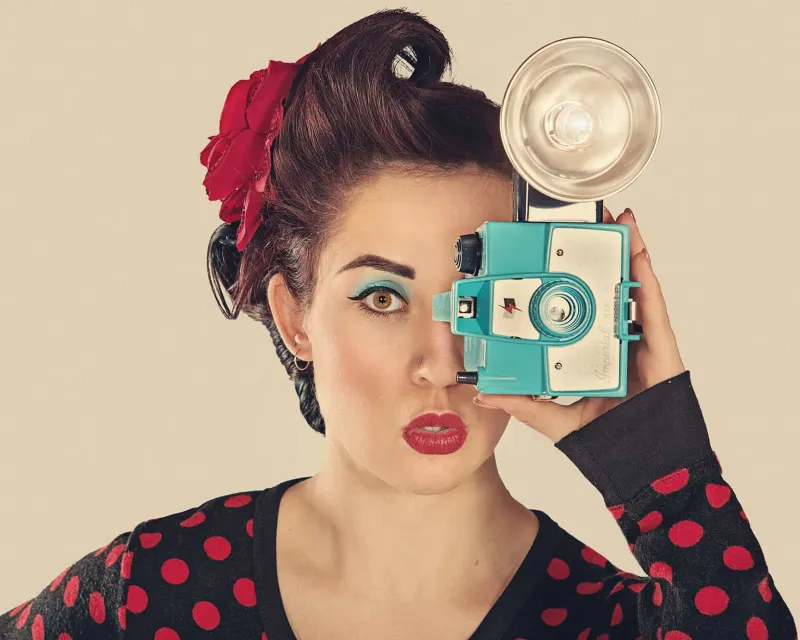
On one hand, digital removed the financial pressure of film. You could shoot hundreds of frames, experiment freely, and review results immediately on the camera's LCD screen. The learning curve compressed dramatically. On the other hand, digital images — especially early ones — had a clinical sharpness and color rendering that felt at odds with the warmth and grain of film. Getting a digital image to look vintage required deliberate effort.
That tension between the medium's natural tendencies and the desired aesthetic is still very much alive in the pin-up photography community today.
The Purists vs. The Innovators
Spend any time in online communities dedicated to vintage-style photography and you'll encounter a genuine philosophical divide. On one side are the purists: photographers who shoot on film, develop in analog darkrooms, and view any digital intervention as a betrayal of the form. For them, the imperfections of film — the grain, the slight color shifts, the unpredictability — aren't bugs to be corrected. They're the entire point.
"There's something that happens with film that you just can't fully replicate in post," explains one photographer who runs a small studio in Los Angeles specializing in 1950s-style glamour work. "The way highlights roll off, the way skin tones render on Portra 400 — software can get close, but it's not the same thing. My clients who've done both can always tell the difference."
On the other side are photographers who see digital tools not as compromises but as expansions of possibility. Lightroom presets, Photoshop retouching, AI-assisted background replacement — these aren't cheating. They're just a different set of tools that happen to make certain things faster, cheaper, and more accessible.
"I came up shooting digital and I learned everything I know about vintage aesthetics from studying old photographs and figuring out how to reverse-engineer them in post," says a Chicago-based photographer who shoots primarily for content creators and independent models. "My clients aren't paying for film authenticity. They're paying for a look. And I can deliver that look consistently, affordably, and quickly with digital."
Neither position is wrong, exactly. They just represent different values.
The Technology That's Actually Changing the Game
Beyond the film-versus-digital debate, several specific technological developments are reshaping how pin-up photography gets made.
LED lighting panels have largely replaced tungsten studio lights for many photographers working in this space. They run cooler, consume less power, and can be color-tuned to mimic the warm, slightly amber quality of vintage tungsten sources without actually requiring the hot, power-hungry fixtures. For photographers working in home studios or renting spaces without dedicated electrical setups, this is genuinely transformative.
Mirrorless camera systems have compressed the gap between amateur and professional image quality to a degree that would have seemed impossible fifteen years ago. A skilled photographer with a mid-range mirrorless body and a good lens can produce images that are technically indistinguishable from those made with cameras costing three times as much. This has opened the door for a wave of independent photographers who couldn't previously afford to compete on image quality.
Editing software and presets deserve their own conversation. The vintage film preset market — Lightroom presets designed to mimic specific film stocks, grain structures, and color profiles — has exploded. Some of these products are genuinely sophisticated, developed through careful analysis of actual film scans. Others are blunt instruments that produce results that look more like a retro Instagram filter than a genuine analog photograph. Learning to tell the difference, and to use the better tools subtly rather than heavily, is a skill in itself.
AI-assisted tools are the newest and most contested element. Background removal and replacement, skin retouching that goes far beyond what was previously possible in reasonable time, even AI-generated set elements — these capabilities are arriving faster than the community can fully process their implications.
Social Media and the Democratization of Distribution
Perhaps the most significant shift isn't in how pin-up images are made, but in how they reach audiences. The old model required gatekeepers: magazine editors, calendar publishers, the owners of physical distribution networks. A photographer and model could produce brilliant work, but without access to those channels, that work might never find its audience.
Platforms like Instagram — despite their complicated relationship with content that skirts their community guidelines — have fundamentally changed that equation. Independent photographers can build substantial followings, connect directly with models and clients, and distribute work to genuinely global audiences without a single intermediary. Subscription platforms have created entirely new economic models for both photographers and models who work in this space.
This democratization has brought incredible diversity to pin-up imagery. Photographers and models of all backgrounds, body types, and aesthetics are contributing to and expanding what the genre looks like. The vintage pin-up aesthetic — which was historically quite narrow in terms of who it centered — is being reclaimed and reinterpreted by communities who were largely absent from its original expression.
What Gets Lost, What Gets Gained
It would be dishonest to pretend that nothing is lost in this transition. The slowness of film photography — the deliberate setup, the careful light reading, the discipline of not being able to immediately review your results — created a certain kind of attention and intentionality that's harder to maintain when you're shooting digital and reviewing frames after every few shots.
But what's gained is arguably more significant: accessibility, diversity, speed, and the ability for people who love this aesthetic to participate in it without the significant financial and logistical barriers that previously existed. The best contemporary pin-up photographers — whether they're shooting film or digital, working in professional studios or converted garages — understand that the technology is just a means. The look, the feeling, the particular kind of playful, confident, glamorous energy that defines the genre at its best? That comes from somewhere the technology can't reach.
It comes from understanding what made this stuff great in the first place, and caring enough to honor it.