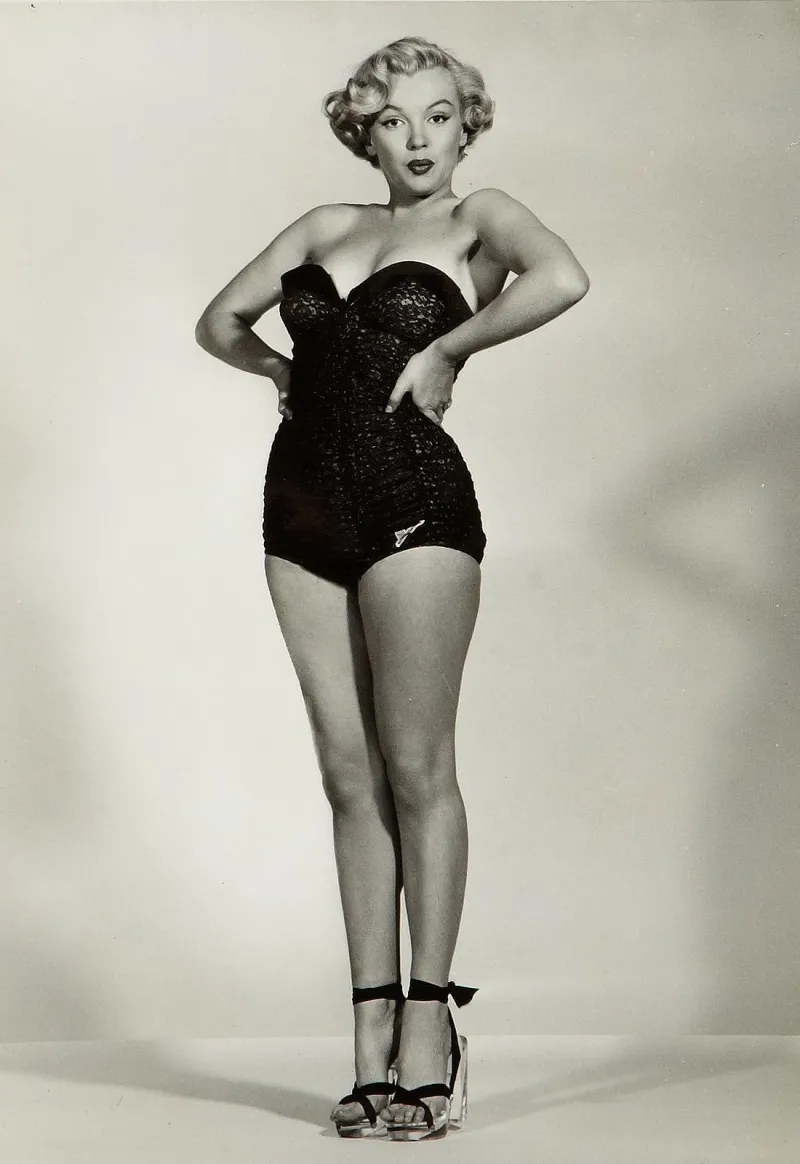
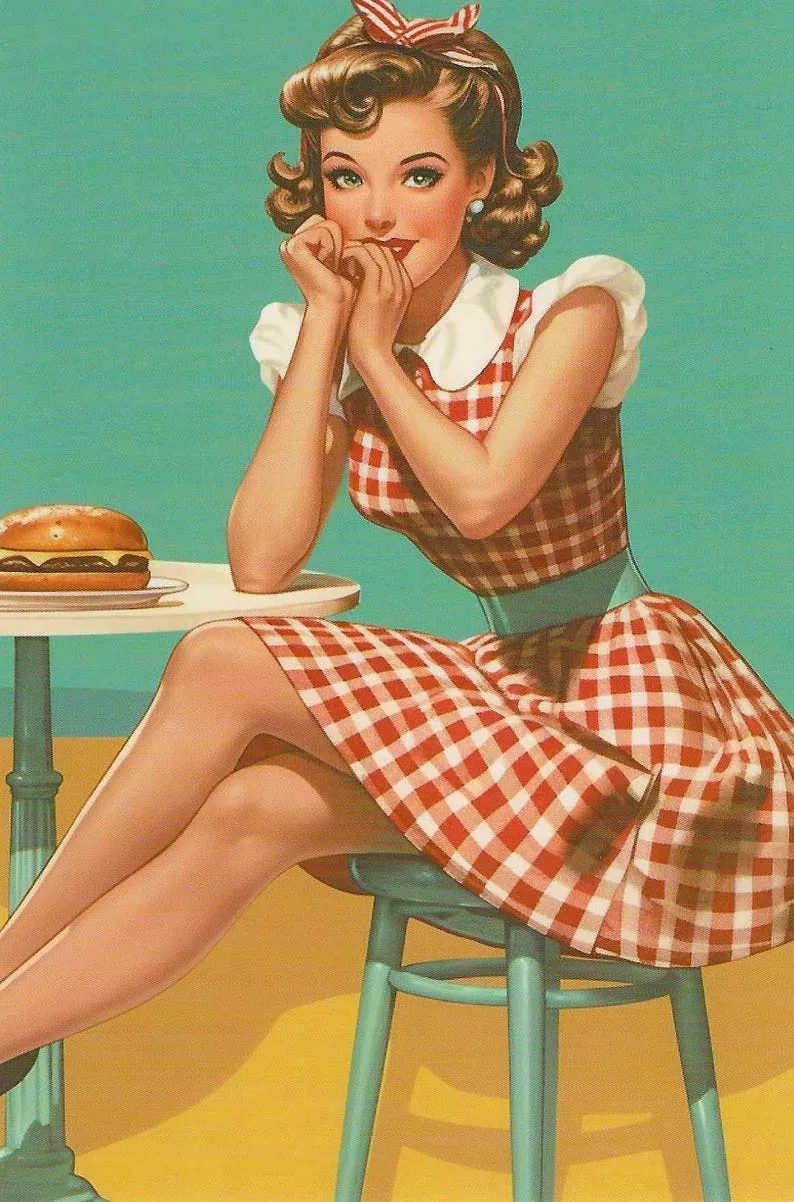
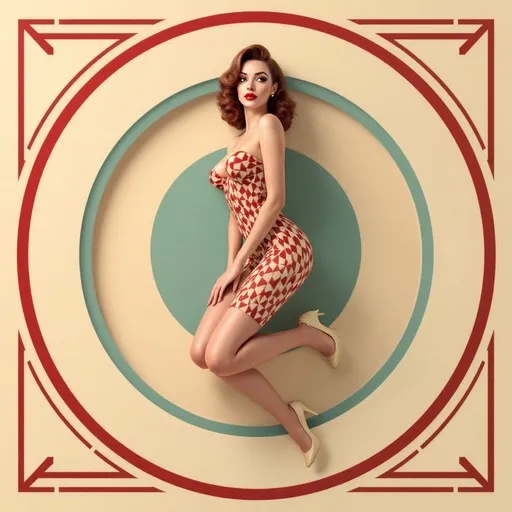
Less Is More: The Forgotten Science of Pin-Up Seduction
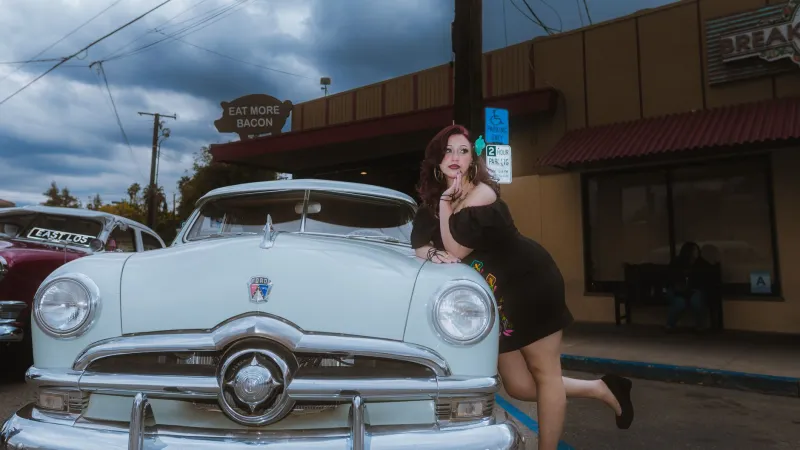
There's a reason those old calendar girls still stop you cold. Decades removed from their heyday, they somehow feel more magnetic than half the content flooding your feed right now. It's not nostalgia doing all the heavy lifting. It's something more deliberate — a calculated, almost architectural approach to allure that the golden age of pin-up practically turned into a science.
We live in an era of instant everything. Swipe, scroll, next. Which makes it even more fascinating to look back at a time when a single photograph — one image, frozen in time — had to do all the work. No video. No caption. No follow-up story. Just a woman, a camera, and an unspoken conversation between subject and viewer that somehow managed to hold attention for years, sometimes decades.
So how did they do it?
The Power of the Almost
Classic pin-up wasn't about exposure. It was about implication. The best artists in the genre — Gil Elvgren, Alberto Vargas, Peter Driben — understood that the human imagination is the most powerful collaborator you'll ever have. Give someone everything, and you've closed the loop. Leave something just out of frame, and you've opened a door they'll spend time walking through on their own.
Think about the iconic wardrobe malfunction poses: the skirt caught by a gust of wind, the strap sliding off a shoulder, the stocking that needs adjusting. None of these scenarios are explicit. All of them are electric. The tension lives in the moment before — and that's exactly where the classic pin-up lived, too. Always on the edge of something. Never quite over it.
Psychologists have a term for this: the Zeigarnik Effect. Essentially, our brains fixate on incomplete things more intensely than resolved ones. The golden age pin-up artists may not have had a clinical name for it, but they understood the principle intuitively. An unresolved visual narrative is a hook that stays lodged.
Eyes Don't Lie — And They Know It
If you study vintage pin-up imagery closely, you'll notice something consistent about the gaze. It's rarely confrontational. It's rarely vacant, either. The sweet spot — the one that made Bettie Page a legend and kept Betty Grable's poster pinned to the inside of a million WWII lockers — is somewhere between awareness and invitation.
These women looked like they knew you were watching. And they were absolutely fine with it. That confidence, communicated entirely through a sidelong glance or a half-smile caught mid-laugh, told a whole story. It said: I'm in on this too. That sense of mutual participation transformed a passive viewer into an active participant in the fantasy. You weren't just looking at someone. You were sharing a moment with them.
Modern research on attraction backs this up. Studies consistently show that expressions of warmth, confidence, and amusement are more compelling than overtly provocative ones. The pin-up queens knew this long before the data did.
Timing, Tension, and the Art of the Pause
Here's something people don't talk about enough: pin-up was a performance art, even in still photography. The models who became iconic weren't just posing — they were acting. They understood timing the way a comedian understands the pause before a punchline.
Look at the body language in a well-executed vintage pin-up shot. Weight shifted to one hip. A hand mid-gesture, not fully landed. A glance thrown over a shoulder, as if someone just called their name. Everything is in motion, even in a static image. That sense of interrupted action — of catching someone in the middle of something — creates narrative momentum. Your eye wants to know what happens next.
Burlesque performers of the same era applied this same principle in real time. The art of the tease wasn't about the reveal. It was about the deliberate, excruciating delay of it. Every removed glove was a chapter. Every loosened pin in an updo was a cliffhanger. The audience wasn't just entertained — they were invested.
What She Wore Said What She Didn't
Costume and styling in the classic pin-up world weren't just aesthetic choices — they were communication tools. A crisp white button-down, slightly too big, worn casually off one shoulder: that's not an accident. It's a constructed narrative. It implies intimacy, informality, an early morning or a late night. It tells you something happened, or is about to.
The same logic applied to color. Red lips weren't just glamorous — they were a signal, deliberate and ancient. High heels elongated and altered posture in ways that read as confident, self-possessed. Even hairstyles carried meaning: the victory roll said capable and put-together; the loose, tousled wave said something else entirely.
The savviest pin-up models were essentially stylists of their own image, curating every visual element to reinforce a specific emotional impression — without a single word of explanation.
Bringing It Into the Modern Frame
Here's the thing: none of this is obsolete. If anything, in a world drowning in oversharing, the principles that made golden age pin-up so potent are more valuable than ever.
Mystery is a renewable resource. Restraint is a flex. The willingness to let someone's imagination do some of the work — to offer a suggestion rather than a statement — is a skill, and it's one that takes actual craft to execute well.
Whether you're building a vintage-inspired personal aesthetic, studying the history of American visual culture, or just trying to understand why those old images hit differently than most of what's out there today, the answer keeps coming back to the same place: the women in those photographs understood something fundamental about desire. They knew that what's just out of reach is always more compelling than what's handed over freely.
They weren't withholding. They were curating. And that distinction — small as it sounds — made all the difference.
The best pin-up wasn't a picture of a woman. It was the beginning of a story you got to finish yourself. And seventy years later, people are still reading.