Eat Like a Bombshell: Busting the Myths Around What Golden Age Pin-Ups Actually Put on Their Plates
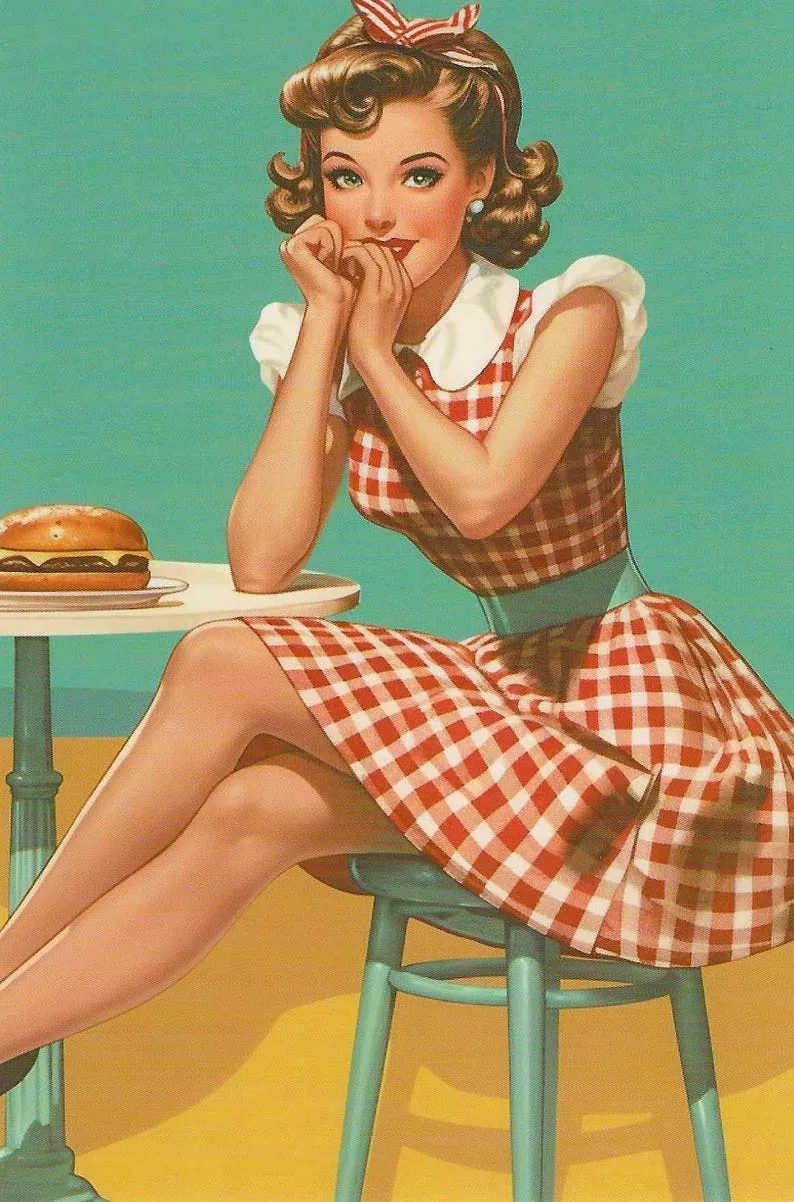
Photo: 1950s vintage pin-up woman eating retro diner americana, via i.etsystatic.com
There's a version of 1940s and '50s pin-up culture that gets passed around like a well-worn postcard — all hourglass figures, effortless curves, and the implication that these women woke up looking like that every single morning without breaking a sweat or eating a proper meal. It's a romantic notion. It's also, in large part, a carefully constructed lie.
The studio system was a machine built on illusion, and that illusion extended well beyond the camera. What pin-up models and starlets ate, how much they weighed, and how their bodies were presented to the public were all subject to the same aggressive editorial control as their hair, their lighting, and their carefully scripted biographies. So what was actually going on behind the scenes? Grab a coffee — or, in the spirit of the era, a Tab and a cigarette — and let's dig in.
The Manufactured Ideal: What the Studios Wanted You to Think
The golden age pin-up aesthetic celebrated curves, but don't mistake that for any kind of body liberation movement. Studios were obsessed with control. Contracts at major houses like MGM and Paramount often included weight clauses — literal numbers that actresses and models were expected to hit, or else. Judy Garland's experience with studio-mandated diet pills is one of the most documented horror stories from this era, but she was far from alone.
The press machine worked overtime to present these women as naturally voluptuous, effortlessly beautiful, and perpetually available — all while quietly enforcing brutal standards behind closed doors. Fan magazines ran soft-focus stories about stars who "loved to cook" and "never dieted," even as those same women were being handed amphetamines and told to drop ten pounds before their next shoot.
The contradiction was baked into the culture. Pin-up icons were supposed to look like they enjoyed life — full lips, full figures, full of fun — but the machinery producing those images operated on deprivation, not abundance.
What They Were Actually Eating (And Not Eating)
Here's where it gets interesting. Actual dietary records, memoirs, and interviews from the era paint a picture that's equal parts resourceful, restrictive, and surprisingly relatable.
For everyday working models — the women appearing in calendar art, men's magazines, and promotional materials rather than major studio films — food was often simply a practical matter. Many came from working-class or middle-class backgrounds where hearty, home-cooked meals were the norm. Think pot roast, canned vegetables, white bread, and plenty of dairy. Post-war America was flush with processed convenience foods, and models weren't immune to the appeal of a TV dinner or a can of Campbell's soup.
Betty Brosmer, one of the most photographed pin-up models of the 1950s and later a fitness pioneer, was notably vocal about the role of exercise and nutrition in maintaining her famous figure. She wasn't starving herself — she was training. Her approach was ahead of its time, emphasizing strength and movement over restriction, though that message rarely made it into the glossy pin-up mythology surrounding her image.
Marilyn Monroe, perhaps the most mythologized figure in the entire pin-up canon, had her diet dissected endlessly during her lifetime and after. She reportedly ate simply — eggs, broiled chicken, raw carrots — and famously claimed to start her mornings with warm milk. Was it the whole story? Almost certainly not. Studio pressure, personal struggles, and the ever-present demand to maintain a specific physical presence meant the reality was messier than any single anecdote suggests.
The Role of the Corset (Yes, Really)
Let's talk about the elephant in the room — or rather, the undergarment. A significant portion of the "hourglass" figure that defined golden age pin-up aesthetics wasn't diet-dependent at all. It was structural.
Foundation garments — girdles, corsets, high-waisted briefs, and bullet bras — were doing a tremendous amount of heavy lifting in those iconic images. The silhouette that became synonymous with 1940s and '50s femininity was as much a product of Playtex engineering as it was of any particular eating habit. Understanding this doesn't diminish the beauty of the aesthetic; it actually makes it more accessible and more honest.
When you see a vintage pin-up photograph and marvel at that impossibly defined waist, you're often looking at the combined effect of strategic undergarments, expert lighting, skilled retouching, and a photographer who knew exactly which angle flattered which figure. The woman herself may have had lunch an hour before that shoot.
How Modern Pin-Up Culture Is Rewriting the Narrative
One of the most meaningful shifts in contemporary pin-up culture — and it's something we celebrate here at Pin-Up 365 regularly — is the movement toward radical body inclusivity. Today's pin-up community actively pushes back against the manufactured ideals of the original era, reclaiming the aesthetic while rejecting the control mechanisms that came with it.
Modern pin-up models and enthusiasts come in every size, shape, and background. The vintage aesthetic — the red lips, the victory rolls, the polka dots and wiggle dresses — has been decoupled from any single body type. And that's not a betrayal of the tradition; it's arguably a correction of it. The original pin-up ideal was never really about celebrating natural bodies. It was about selling a fantasy manufactured under enormous pressure.
Today's community is more likely to celebrate a model eating a cheeseburger in full pin-up regalia and posting it proudly than to perpetuate the myth that looking this good requires deprivation. That's a genuine cultural evolution worth acknowledging.
What We Can Actually Learn From the Golden Age
So what's the takeaway? A few things worth sitting with.
First, the bodies we romanticize from the golden age of pin-up were real bodies — not perfect, not effortless, not maintained without cost. The women behind those images were navigating the same relationship with food, body image, and external pressure that people navigate today, just with fewer resources and a whole lot less cultural permission to talk about it.
Second, the aesthetic and the ideology don't have to be a package deal. You can love the look without buying into the mythology of how it was "supposed" to be achieved. Vintage glamour is a style choice, not a body requirement.
And third — maybe most importantly — the next time someone tries to sell you a "pin-up diet" based on what Marilyn Monroe supposedly ate in 1953, you have full permission to roll your eyes, pour yourself something delicious, and remember that the real story is always more interesting than the press release.
Golden age glamour was never about what these women ate. It was about how they made you feel when they walked into the room — or off the page. That part? Completely diet-independent.