Skin Deep and Timeless: Why Pin-Up Tattoos Are Having Their Biggest Moment Yet
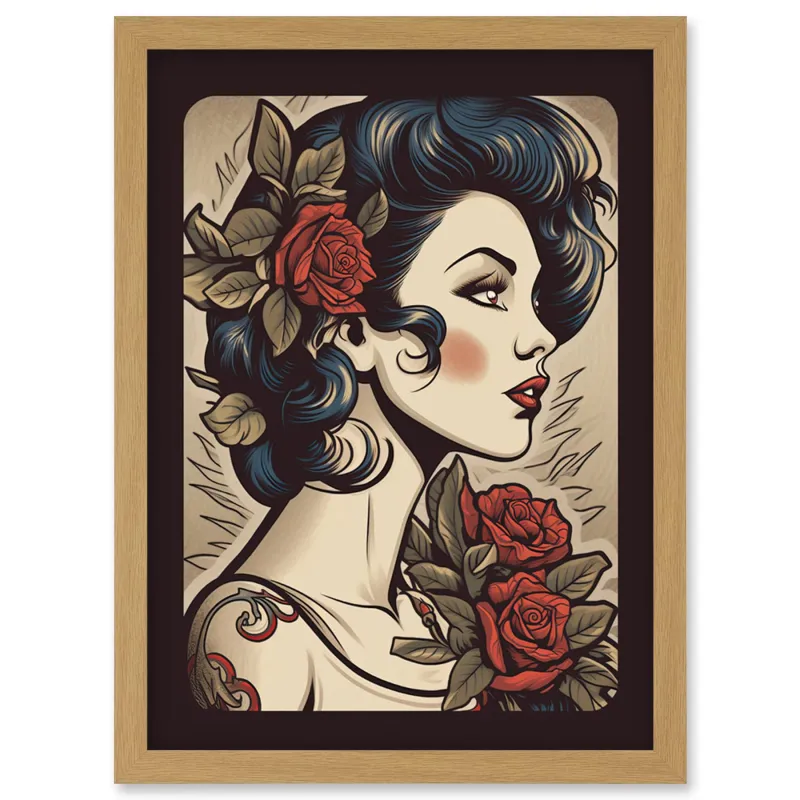
Photo: vintage pin-up tattoo flash art traditional American style, via m.media-amazon.com
There's something undeniably magnetic about walking into a tattoo shop today and seeing flash sheets lined with curvy figures in victory rolls, seamed stockings, and come-hither glances borrowed straight from a 1940s calendar. Pin-up imagery — once the exclusive territory of sailors, soldiers, and the walls of wartime barracks — has planted itself firmly in 21st-century tattoo culture, and it doesn't look like it's going anywhere.
So what's the pull? Why are millennials and Gen Zers, two generations raised on hyper-digital aesthetics and fast-fashion trends, lining up to get inked with imagery that predates their grandparents' first date? The answer is layered, personal, and a whole lot more interesting than simple nostalgia.
From Ship to Skin: A Quick History of the Pin-Up Tattoo
Long before Pinterest boards and tattoo convention floor space, the pin-up tattoo had a very specific home: the American sailor. Guys shipping out in the early 20th century would visit tattoo parlors in port cities like Norfolk, San Diego, and San Francisco, picking flash art off the wall that reminded them of home, femininity, and everything worth fighting for. Artists like Sailor Jerry Collins — the legendary Norman Collins of Honolulu — became famous for blending Japanese technique with American iconography, and the curvaceous pin-up figure was one of his most requested designs.
These weren't subtle pieces. They were bold, graphic, and built to last — heavy outlines, a limited but punchy color palette, and imagery that read clearly even from across a crowded deck. The women depicted were idealized, yes, but they also carried a kind of playful confidence that felt rebellious for the era. That tension between propriety and provocation is baked right into the DNA of the style.
By the postwar years, pin-up tattoos had spread beyond the military and into biker culture, carnival workers, and eventually the broader American working class. Then came the tattoo renaissance of the 1990s and early 2000s, which brought a renewed appreciation for "Traditional" or "Old School" American tattooing — and the pin-up came roaring back with it.
The Modern Twist: What's Changed (and What Hasn't)
Today's pin-up tattoos owe a clear debt to those mid-century originals, but contemporary artists have pushed the form into exciting new territory. The core visual language — bold outlines, saturated color, a sense of theatrical femininity — remains intact. What's evolved is the who and the why.
Modern interpretations frequently feature subjects that look like actual people rather than idealized archetypes. Tattoo artists across the country are creating pin-up pieces that reflect a wider range of body types, skin tones, and gender expressions. A client might walk in with a reference photo of their grandmother, a favorite fictional character, or even themselves, and walk out with a vintage-style tribute rendered in classic flash technique. That personalization is a relatively new development, and it's arguably what's kept the style so vital.
Regionally, you'll notice some variation in how the aesthetic plays out. Southern California shops tend to lean into the sun-and-surf vibe — think beach bunnies and retro swimwear. Chicago and New York artists often bring a harder edge, blending pin-up imagery with neo-traditional elements or darker color palettes. In the South, particularly in Texas and Nashville, there's a strong crossover with rockabilly culture, where pin-up tattoos are part of a whole lifestyle aesthetic that includes the hair, the clothes, and the car.
Why This Generation Is So Into It
Here's the thing about millennials and Gen Z: they grew up in a media landscape that was relentlessly forward-looking, and a lot of them are exhausted by it. Vintage aesthetics offer something that feels handcrafted, considered, and emotionally resonant in a way that algorithmic content rarely does.
Pin-up tattoos specifically tap into a complicated but compelling kind of nostalgia — one that doesn't idealize the past uncritically, but borrows its visual warmth and playfulness while updating its values. Getting a pin-up tattoo in 2024 isn't about wishing you lived in 1945. It's about claiming a visual language that feels bold, unapologetically feminine (or femme-adjacent), and a little bit cheeky.
There's also an identity dimension worth noting. For a lot of people getting these pieces, a pin-up tattoo is a statement about body confidence. The figures in classic pin-up art were drawn with exaggerated curves and an air of self-possession that many clients find genuinely empowering. Wearing that imagery permanently on your skin is a way of saying: this is what I celebrate.
Popular Motifs and What They Mean
If you spend any time scrolling tattoo artists' portfolios — or honestly, just hanging around this site — you'll start to notice some recurring images in the pin-up tattoo world:
- The Classic Cheesecake Figure: The foundational image. A woman in retro lingerie, a wiggle dress, or a sailor outfit, usually mid-pose with a knowing smile. Timeless for a reason.
- The Vargas Girl: Inspired by Alberto Vargas's famously airbrushed illustrations for Esquire and Playboy, these pieces tend to be softer and more illustrative, with a dreamy quality that translates beautifully into tattoo work.
- Rockabilly Pin-Up: Victory rolls, polka dots, cherries, and a rebellious attitude. Often combined with cars, dice, or playing card motifs.
- Fantasy and Crossover Pin-Ups: Mermaids, witches, cowgirls, and even pop culture characters rendered in classic pin-up style. This is where modern artists really get to stretch.
- Portrait Pin-Ups: Custom pieces based on real people — partners, family members, or the client themselves — are increasingly popular and represent the most personal expression of the form.
Finding the Right Artist
Not every tattoo artist who can do a pin-up should do a pin-up. The style demands a specific skill set: confident linework, an understanding of vintage illustration technique, and the ability to render feminine forms with both accuracy and personality. When you're shopping for an artist, look for someone whose portfolio includes healed examples of Traditional or neo-Traditional work with strong, clean lines and saturated color that hasn't muddied over time.
Don't be shy about bringing reference images — not just of tattoos, but of the original pin-up art that inspires you. Calendar girls by Gil Elvgren, Vargas illustrations, or even vintage magazine covers can all serve as jumping-off points for a conversation with your artist about what you want the piece to feel like.
The Bigger Picture
Pin-up tattoos have always been about more than decoration. From their origins as talismans of longing and loyalty to their current life as expressions of identity and aesthetic devotion, these pieces carry real cultural weight. They're a living archive of American visual history, worn by people who find something in that history worth keeping close.
At Pin-Up 365, we think that's worth celebrating every single day of the year. Whether you're a collector with a full sleeve of vintage flash or someone just starting to think about your first piece, the classic pin-up tattoo is one of those rare art forms that manages to feel both deeply rooted and completely of-the-moment. And honestly? That's exactly what makes it so irresistible.