Red Lips, Cat Eyes, and a Whole Lot of Know-How: The Pro's Guide to Nailing Vintage Pin-Up Makeup Today
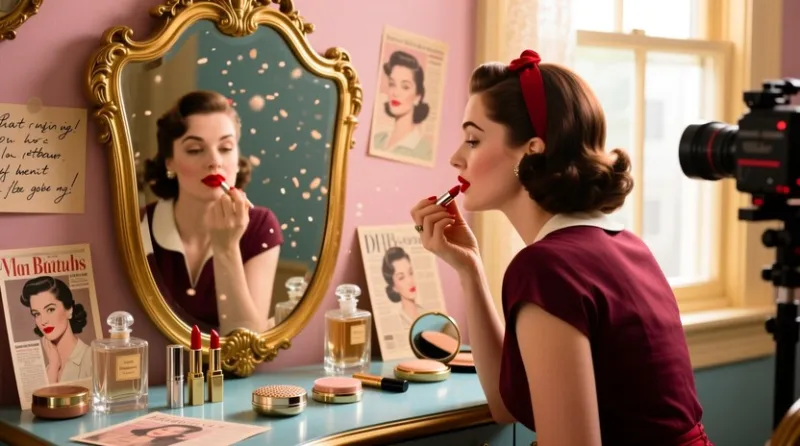
Photo: vintage pin-up makeup artist applying red lipstick retro glamour beauty tutorial 1950s, via images.stockcake.com
There's a reason vintage pin-up beauty has never really gone out of style. It's bold without being aggressive, feminine without being fussy, and somehow manages to feel both timeless and totally of-the-moment depending on how you wear it. But here's the thing — those looks that seem so simple in old photographs? They took serious skill to pull off. Professional makeup artists who specialize in retro aesthetics will tell you that recreating them authentically is part history lesson, part chemistry class, and part pure technique.
We talked to working MUAs who live and breathe this stuff, dug into the history of cosmetic formulation, and put together a decade-by-decade breakdown that'll help you go from curious to genuinely capable. Let's get into it.
Why Vintage Makeup Looks So Different (And Why That Matters)
Before you can recreate the look, you have to understand why it looked the way it did in the first place. Early to mid-century cosmetics were formulated completely differently than what we use today. Foundations were heavier, more opaque, and often had a slightly waxy finish — partly because the technology to create lightweight coverage didn't exist yet, and partly because photography of the era required skin to read as smooth and even under harsh studio lighting.
Lipsticks were dense and pigment-rich because they needed to photograph well in black and white. Mascara came in cake form and had to be activated with water and a tiny brush. Eye shadow textures were chalky and pressed with minimal binding agents. None of this is a complaint — it's context. Understanding the original tools helps you figure out which modern products actually mimic those finishes authentically, and which ones just look like costumes.
The 1940s: Softness, Seduction, and That Girl-Next-Door Glow
The classic WWII-era pin-up — think the kind of image a soldier might tuck into his uniform pocket — leaned heavily into approachable glamour. Skin looked luminous but not dewy in the modern sense. Think more of a soft-focus perfection, like the world's most flattering Instagram filter applied in real life.
The skin: Pro MUAs recommend starting with a silicone-based primer to blur pores, then layering a medium-coverage foundation with a slightly satin finish. Avoid anything that reads as matte or flat — the 40s look had warmth to it. Set with a finely milled translucent powder, focusing on the T-zone while letting the cheeks stay slightly luminous.
The cheeks: Blush placement is everything here. Think apples of the cheeks swept softly upward toward the temples — a rounded, lifted application rather than the sharp contour-heavy approach of more recent trends. Peachy-rose shades are your friends. Coral works beautifully on deeper skin tones.
The eyes: Soft, smudged liner along the upper lash line, a neutral wash of brown or taupe on the lid, and well-curled, mascara-coated lashes. The 40s weren't heavy on eye shadow drama — the emphasis was always on lips.
The lips: Full, defined, and deeply pigmented. Cherry red is the iconic choice, but wine, raspberry, and warm berry shades all read as period-accurate. Use a lip liner to define the Cupid's bow with precision — slightly overdrawing the upper lip to achieve that classic fullness — then fill in with a matte or satin lipstick. Blot, reapply, blot again. That staying power is intentional.
The 1950s: High Drama, High Glamour, No Apologies
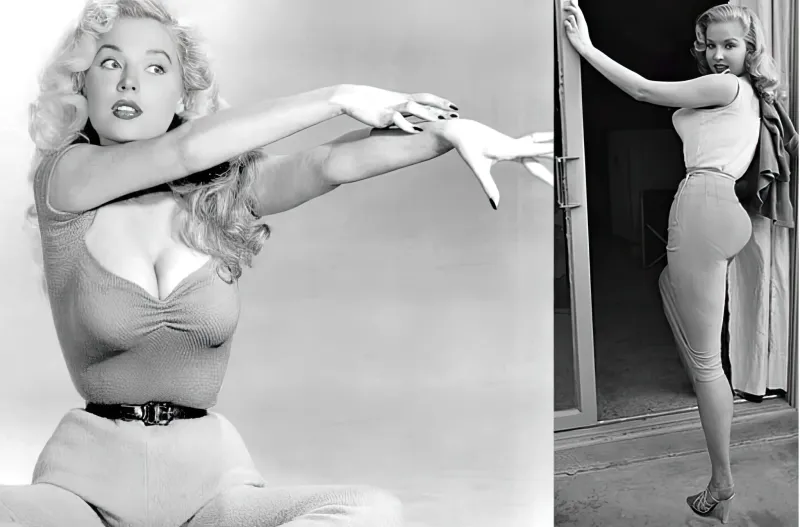
This is the decade most people picture when they think "pin-up." The 1950s aesthetic is defined by graphic contrast: flawless porcelain skin, jet-black liner, and lips that could stop traffic. Artists like Bettie Page and the models who appeared in early men's magazines embodied a look that was simultaneously wholesome and devastating.
The skin: More coverage than the 40s, but still with that luminous quality. A full-coverage foundation — something like a long-wear formula that doesn't oxidize — applied with a damp beauty sponge gives you that polished, almost airbrushed finish. Powder heavily under the eyes to prevent creasing, since the liner work in this decade is serious.
The eyes: Here's where the magic happens. The 50s cat eye is not just a flick at the corner — it's a full architectural statement. Start by lining the entire upper lash line with a felt-tip or gel liner, keeping the line thin at the inner corner and gradually building thickness toward the outer edge. The flick should extend upward at roughly a 45-degree angle, following the natural curve of your lower lash line extended outward. Pro tip: use a small piece of tape as a guide for a clean angle, then remove it before the liner dries completely.
For the lower lash line, a soft smudge of dark brown or black pencil in the outer two-thirds keeps things sultry without going full raccoon.
The lips: Still red, still bold, but the 50s introduced more variety — coral, fuchsia, and even pale pinks appeared as cosmetic companies expanded their ranges. The application method remains the same: liner first, fill second, blot and repeat.
The Early 1960s: Graphic, Graphic, Graphic
As pin-up aesthetics shifted into the early 60s and began bleeding into the mod era, eyes became the undeniable focal point. Think Brigitte Bardot's smoky, heavy-lidded gaze or the stark graphic liner looks that started appearing in fashion editorials.
The eyes: Lower lash line drama arrives. False lashes — both upper and lower — become essential tools. Individual lower lashes applied to the outer corners create that wide-eyed, almost doll-like effect that defined early 60s beauty. Upper lashes should be voluminous and slightly spiky; look for strip lashes with varied lengths rather than uniform ones.
The lips: Deliberately underplayed to balance eye drama. Nude pinks, peachy beiges, and soft roses replace the deep reds of previous decades. Gloss over matte was increasingly common.
Modern Products That Actually Get It Right
Here's the honest truth: not every product marketed as "vintage-inspired" actually delivers a period-accurate result. After talking to working artists, a few categories consistently come up as reliable:
- Gel liners outperform liquid for longevity and control when doing cat eye work
- Cream blushes blend more naturally and give that organic flush that powder can't always replicate
- Setting sprays with a satin finish help unify the look without adding the dewy sheen that reads as too contemporary
- Lip liners that match your lipstick exactly — or go one shade deeper — are non-negotiable for clean, defined edges
The biggest mistake beginners make, according to the MUAs we spoke with, is treating each element as separate. Vintage pin-up makeup is a complete composition. The eyes, skin, lips, and brows have to be calibrated against each other — not just executed individually and hoped for the best.
Brows: The Element Everyone Forgets
We'd be remiss not to address brows, which changed dramatically across these decades. The 40s favored a naturally full, slightly arched brow. The 50s went slightly more defined and arched. The early 60s introduced the high, thin, dramatically arched brow that read as almost theatrical.
For most modern recreations, a brow pencil in a shade that matches your natural hair color — applied in short, hair-like strokes — gives the most authentic result. Avoid brow gels that create a laminated, slicked look; that's a contemporary finish that immediately breaks the vintage illusion.
The Bottom Line
Vintage pin-up beauty is genuinely learnable. It rewards patience, practice, and a willingness to understand why these techniques developed the way they did. Start with one decade, master its signature elements, and build from there. The tools available today are honestly better than what those original artists were working with — smoother formulas, more pigment, longer wear. You've got every advantage. Now go use it.