Built to Last: Why Pin-Up Glamour Hits Different in a World That Throws Everything Away
Scroll your feed for about ten minutes and you'll feel it — that low-grade exhaustion that comes from consuming content that was never meant to mean anything. A meme from Tuesday is ancient history by Thursday. A trend that dominated your For You page last month is already embarrassing. Fast fashion hauls get unworn and donated. Filters replace faces. Everything is loud, nothing sticks, and somehow we're supposed to feel satisfied.
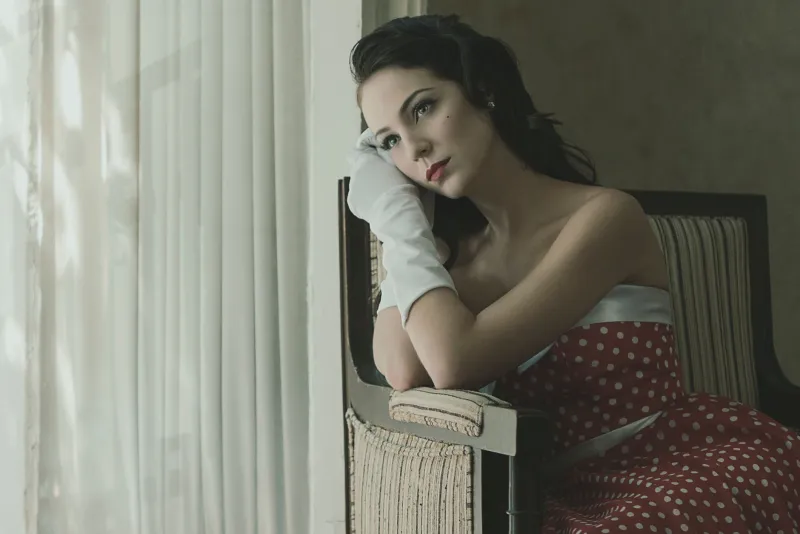
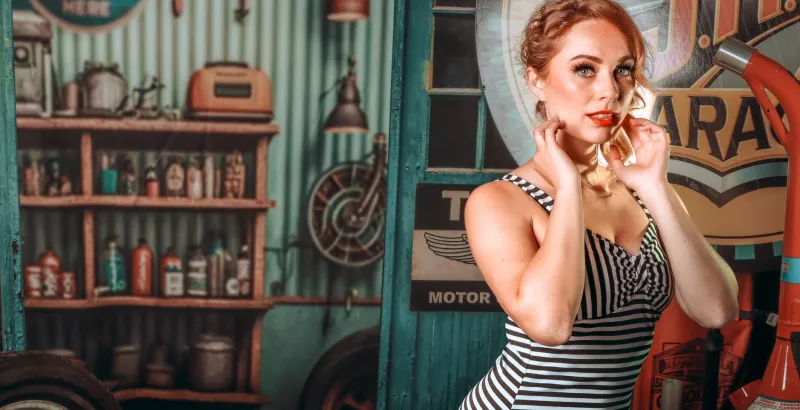
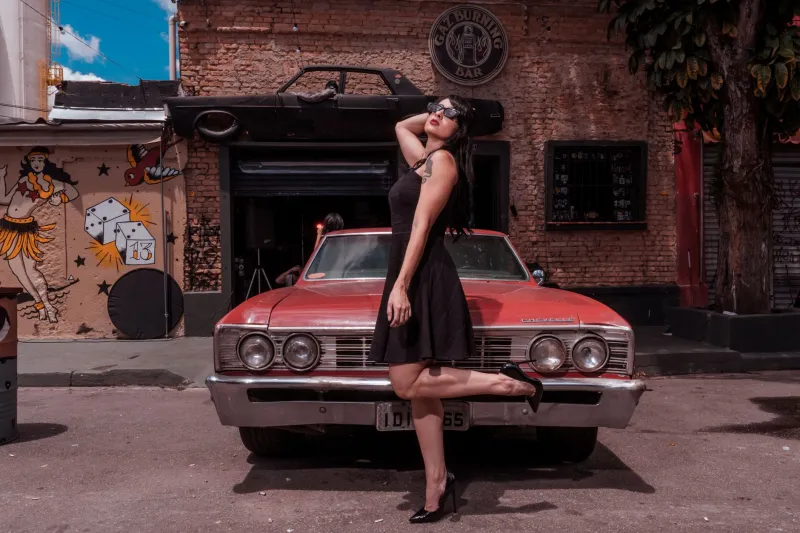
And then, cutting right through all of that noise, there's a woman in a perfectly fitted wiggle dress, red lips sharp enough to cut glass, posed with the kind of quiet confidence that doesn't need a caption to explain itself. She looks like she's been there forever. She probably has.
That's the pin-up paradox. The older it gets, the more relevant it becomes.
The Disposable Era Has a Taste Problem
Let's call it what it is. Consumer culture in 2024 is optimized for volume, not quality. Shein drops thousands of new styles every single day. Social media platforms algorithmically reward novelty over depth. Beauty trends cycle so fast that by the time you've mastered the "clean girl" look, you're already behind. We are living inside a machine that is specifically designed to make you feel like nothing you own, wear, or create is ever quite enough.
The psychological toll of that is real. Research consistently shows that choice overload — too many options, too much stimulation — leads to anxiety, dissatisfaction, and a creeping sense of meaninglessness. When everything is available and nothing feels precious, the human brain starts searching for anchors.
Pin-up culture, it turns out, is one hell of an anchor.
Craft Is a Quiet Rebellion
Here's what sets vintage glamour apart from pretty much everything else competing for your attention right now: it was made with intention.
A seamed stocking wasn't just functional — it was a deliberate line drawn up the back of a leg, a visual statement that took time and care to execute. A bullet bra wasn't just lingerie — it was architectural. Golden Age photographers like Bunny Yeager and Bruno Bernard didn't point and shoot; they built images the way a painter builds a canvas, thinking about light, shadow, composition, and the story a single frame could tell across decades.
That intentionality is almost shocking by modern standards. We are so used to content that exists to be consumed and discarded that encountering something made to last feels genuinely disorienting — and genuinely thrilling.
When someone commits to a full vintage pin-up look today — sourcing a 1950s reproduction circle skirt, setting their hair in proper pin curls, applying a winged liner that would've made Bettie Page nod in approval — they are making a statement that has nothing to do with irony and everything to do with values. They are saying: I believe some things are worth the effort.
The Philosophy Behind the Petticoats
It would be easy to write off the pin-up revival as nostalgia — a soft, comfortable retreat into a simpler past. But that reading misses the point entirely.
The women driving pin-up culture right now aren't naive about history. They know the 1940s and '50s came with plenty of baggage for women, people of color, and the LGBTQ+ community. They're not trying to time travel. What they're doing is something more sophisticated: they're cherry-picking the aesthetic philosophy of that era — the commitment to craftsmanship, the celebration of the body as something worthy of presentation, the idea that getting dressed is an act with meaning — and transplanting it into a present that desperately needs it.
That's not escapism. That's curation. And in an age of algorithmic chaos, curation is power.
When the Photograph Becomes a Document
One of the most underappreciated aspects of pin-up culture is its relationship to permanence through image-making. A well-executed vintage-style pin-up photograph isn't just a picture — it's a document. It's meant to be printed, framed, handled, kept.
Compare that to the average Instagram post, which has a meaningful engagement window of roughly 48 hours before the algorithm buries it. Or the TikTok video that gets two million views and then vanishes into the void. Digital content is designed for throughput, not preservation.
The photographers and subjects investing in proper pin-up shoots — the styled sets, the film-era lighting setups, the deliberate poses drawn from decades of visual tradition — are essentially opting out of the ephemeral economy. They're creating objects (yes, objects — prints, books, portfolios) that exist in physical space and resist deletion.
There is something deeply, almost stubbornly human about that impulse. We want to leave a mark. We want to be seen in a way that doesn't expire.
Fast Fashion Can't Compete With a Wiggle Dress That Fits
Let's get practical for a second, because the philosophical argument is well and good, but the material one hits just as hard.
A well-made vintage or reproduction garment — a proper 1950s-silhouette dress, a quality bullet bra, a pair of Cuban-heel stockings — costs more upfront than the fast fashion equivalent. There's no getting around that. But it also fits differently, feels differently, and lasts differently. Women who've made the switch from trend-chasing to building a curated vintage-inspired wardrobe consistently report the same thing: they buy less, wear what they own more, and feel better every single time they get dressed.
That's not a small thing. In a culture that profits from your perpetual dissatisfaction with what you already own, finding a style framework that actually satisfies you is an act of financial and psychological self-defense.
Pin-up style, with its defined silhouettes and timeless reference points, is one of the few aesthetic frameworks that doesn't require constant updating. A red lip and a cinched waist were devastating in 1952. They're devastating now. They'll be devastating in 2042. You cannot say that about a micro-trend.
The Counterculture Nobody Expected
Somewhere along the way, vintage glamour stopped being retro and started being radical.
In an attention economy built on speed, pin-up slows down. In a marketplace built on disposability, pin-up insists on quality. In a visual culture built on filters and fleeting faces, pin-up commits to a crafted, considered image. In a world that profits from your insecurity, pin-up celebrates the body as it is — dressed up, shown off, and unapologetically present.
That's not nostalgia. That's resistance.
And maybe that's why, every year, more people find their way to this world — not just as a style preference, but as a genuine philosophical stance. A decision about how they want to move through a culture that would very much prefer they keep scrolling, keep buying, keep consuming, and never, ever slow down long enough to ask whether any of it is worth a damn.
The pin-up paradox isn't really a paradox at all. It makes perfect sense. When the world goes disposable, permanence becomes the most provocative thing you can reach for.
And a well-placed seam never looked better.