The Art of Almost: How Vintage Pin-Ups Mastered Suggestion Over Spectacle
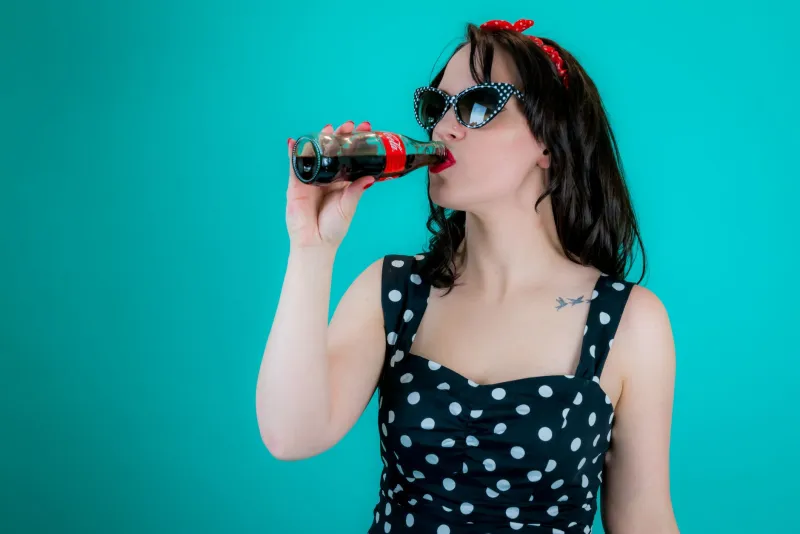
There's a reason your eye keeps drifting back to a classic Gil Elvgren painting even after you've studied it for a full minute. Nothing is spelled out. Everything is implied. A skirt caught mid-swirl, a glance thrown sideways, a strap sliding just far enough off a shoulder to make your brain fill in the rest — that's not an accident. That's a masterclass in controlled communication, and the women who perfected it were far more calculated than history tends to give them credit for.
Vintage pin-up wasn't about exposure. It was about almost. And that distinction is everything.
The Psychology Behind the Almost-Reveal
Human attention is wired to chase incompleteness. Psychologists call it the Zeigarnik effect — the brain fixates on unfinished business. It's the same reason you can't stop thinking about a TV cliffhanger or a conversation that ended too soon. Golden Age pin-up artists and photographers understood this intuitively, even without the academic vocabulary to describe it.
The classic pin-up image was engineered to trigger that exact mental itch. A heel slipping out of a shoe. A button undone one notch too many. A hand raised to catch a hat that's already halfway gone in the wind. Each element gave the viewer just enough to build a story — and then yanked the narrative away before the ending. The result? You couldn't look away. You kept coming back, trying to resolve what the image deliberately refused to resolve.
This wasn't passive. It was strategic. And it required a level of precision that most people don't associate with what they assume was a simpler era of entertainment.
Costume as Conversation
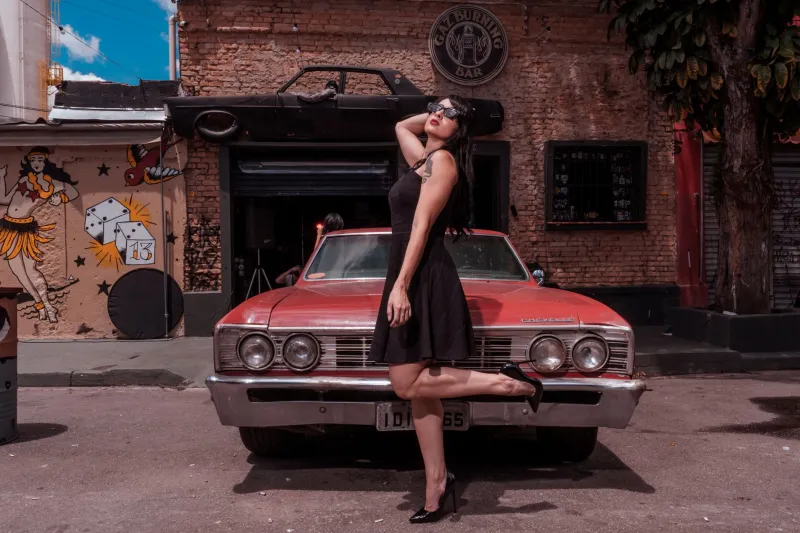
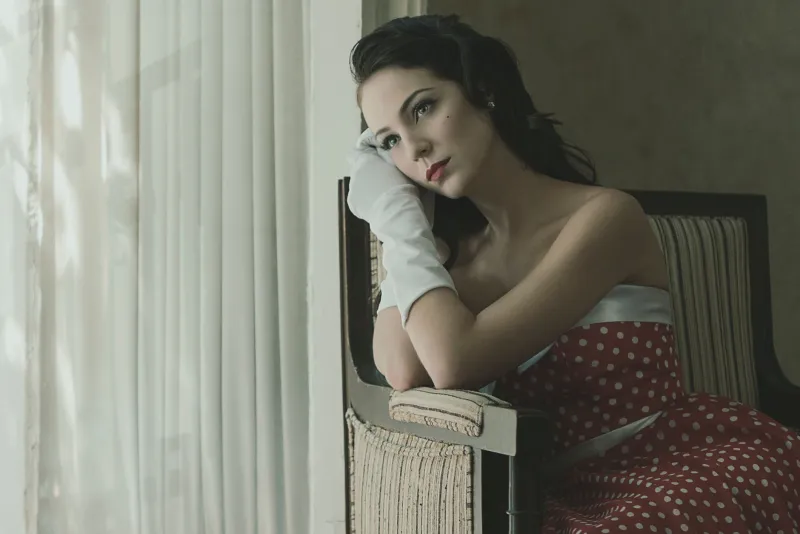
The wardrobe choices in vintage pin-up photography weren't just about looking pretty. Every piece of clothing was a prop in a carefully scripted performance. The garter belt peeking below a hemline. The glove being tugged off one finger at a time. The silk robe that's technically closed but somehow communicates the opposite.
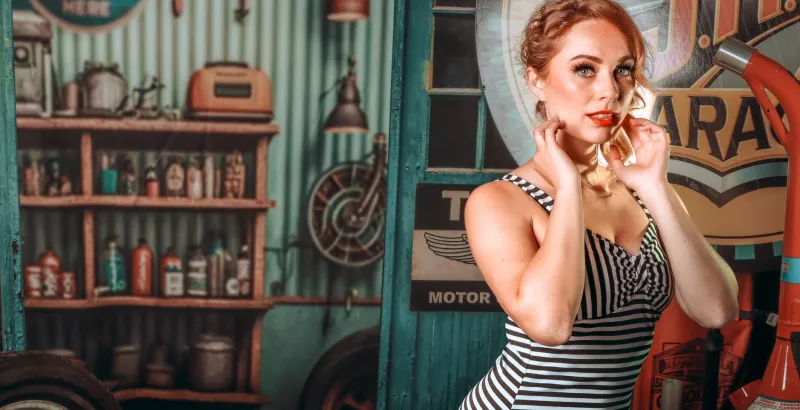
Costume placement was a language all its own. Photographers like Peter Driben and artists like Alberto Vargas understood that the transition zones — the edges of fabric, the gap between a stocking top and a hem, the V of a neckline — were where all the real action happened. Those borders between covered and uncovered were infinitely more compelling than either state alone.
Models were coached to interact with their clothing in ways that suggested movement and transition. A hand at a zipper. Fingers curled around a waistband. The image caught in a moment that implied both what came before and what might come next. The viewer was never a passive observer — they were an active participant, completing the story in their own imagination.
Camera Angles and the Architecture of Intrigue
Angle wasn't incidental in pin-up photography. It was architectural. The camera position determined what the viewer knew, what they suspected, and what they were left to wonder about — and skilled photographers used all three registers simultaneously.
The slightly elevated angle looking down created intimacy and vulnerability. The low angle looking up built stature and authority. The three-quarter turn hid just enough of the subject's expression to make her mood ambiguous — was that a smile or a smirk? Was she inviting or amused? The deliberate withholding of a clear answer kept the viewer engaged in a way that a straight-on, fully readable pose never could.
Shadow was another tool entirely. Soft lighting that fell across part of a face or body didn't just create visual drama — it created informational gaps that the human brain rushed to fill. Mystery isn't born from darkness alone. It's born from the precise edge where light ends.
The Expression That Said Nothing and Everything
If the costume was the vocabulary, the expression was the grammar. And the most powerful pin-up expressions were almost always grammatically ambiguous.
The Mona Lisa effect — that half-smile that refuses to commit to any single emotion — was standard operating procedure for the best pin-up models. Bettie Page understood it. Betty Grable understood it. The expression wasn't coy or flirtatious in any obvious sense. It was unresolved. It suggested that the subject was in on a joke you hadn't heard yet, or that she was thinking something that would change your understanding of the entire image if you could only figure out what it was.
This is harder to pull off than it looks. Genuine ambiguity in an expression requires tremendous muscle control and emotional awareness. It's the difference between a face that's blank and a face that's deliberately withholding. The models who could walk that line became icons. The ones who couldn't remained footnotes.
What This Means for Your Feed, Your Dating Life, and Your Brand
Here's where it gets practical — because these techniques aren't locked in a 1950s time capsule. They're as relevant to a 2024 Instagram grid as they were to a wartime calendar.
The principle of strategic restraint translates directly to social media content. The post that shows almost everything — that crops just before the reveal, that suggests without confirming, that raises a question it doesn't immediately answer — consistently outperforms the post that lays everything out flat. Engagement spikes when people have something to chase. Comments fill up when the image leaves room for interpretation.
In dating and personal presentation, the same logic applies. The person who reveals everything on the first conversation leaves nothing to discover. The one who drops a detail and then pivots, who laughs at something and doesn't explain why, who wears something that prompts a question — that person commands attention across a whole room, not just for a single moment.
For personal branding, vintage pin-up strategy suggests leading with implication rather than declaration. Don't announce your expertise — let it surface through what you reference, what you find funny, what you choose not to say. The brand that has to explain why it's interesting usually isn't. The one that makes you lean in to figure it out? That one sticks.
The Most Powerful Thing You Can Do Is Leave the Room
There's an old performer's rule: always leave the audience wanting more. Vintage pin-up didn't just follow that rule — it was that rule, distilled into a visual form and refined over decades of practice.
The women who built careers in this space understood something that social media culture is still struggling to learn: scarcity creates value. Not artificial scarcity, not withholding for the sake of it, but genuine editorial judgment about what to show and what to protect. The image that stops one beat before the obvious. The caption that raises an eyebrow instead of spelling out a punchline. The profile that has depth you can't see from the surface.
That's the real pin-up playbook. Not a list of poses or a formula for lighting. It's a philosophy of communication that puts the viewer's imagination to work — and trusts that what they conjure will be more compelling than anything you could hand them outright.
Almost always is.