Twelve Months, Twelve Bombshells: The Print Shops Refusing to Let the Pin-Up Calendar Die
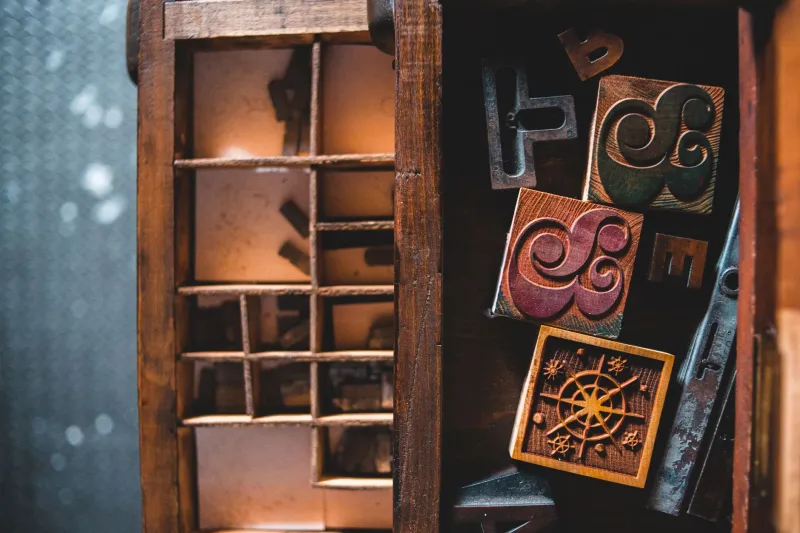
There's a moment in every small print shop that still does this work — usually around 2 p.m., when the afternoon sun hits the press floor just right — where the past and present shake hands.
A proof sheet comes off the press. Twelve women, twelve months, twelve different eras of glamour staring back in full color. And somewhere in the room, a printer who's been running jobs for thirty years will tell you the same thing they all seem to say:
"People said this would be gone by now."
It's not gone. Not even close.
The Analog Anomaly
We live in a country where your phone can generate a photo of anything you want in seconds. So why are vintage-style pin-up calendars — real, physical, wall-hanging calendars — still selling out year after year?
The answer, according to the studios that produce them, is that the calendar was never really about the dates.
"A calendar is a promise," says one Midwestern printer whose family has run the same shop since 1958. "Somebody's going to look at it every single day for a year. That's more attention than most art ever gets. You'd better make it worth looking at."
That's the standard. And it's a high one.
Small Shops, Big Standards
The studios keeping this tradition alive aren't corporate operations. They're three-person teams in converted warehouses in Ohio. They're husband-and-wife photography duos in Texas. They're second-generation press operators in Pennsylvania who can tell a bad ink job by smell alone.
What they share is a refusal to cut corners:
- Real photography, not filters. These shoots use actual film or film-emulation workflows, period-correct lighting, and stylists who know the difference between a 1948 wave and a 1953 wave.
- Paper you can feel. Heavy stock, often with a slight tooth to it, printed with processes closer to mid-century commercial work than anything modern.
- Limited runs. Many studios produce numbered editions. When the year's run sells out, it's gone. That scarcity isn't a marketing trick — it's a budget reality for small shops, and collectors have turned it into a tradition.
One studio owner in the Carolinas put it plainly: "We could print more. We'd rather print better."
The Models Behind the Months
Talk to the women who pose for these calendars and a theme emerges fast: this isn't modeling as a stepping stone. It's modeling as craft.
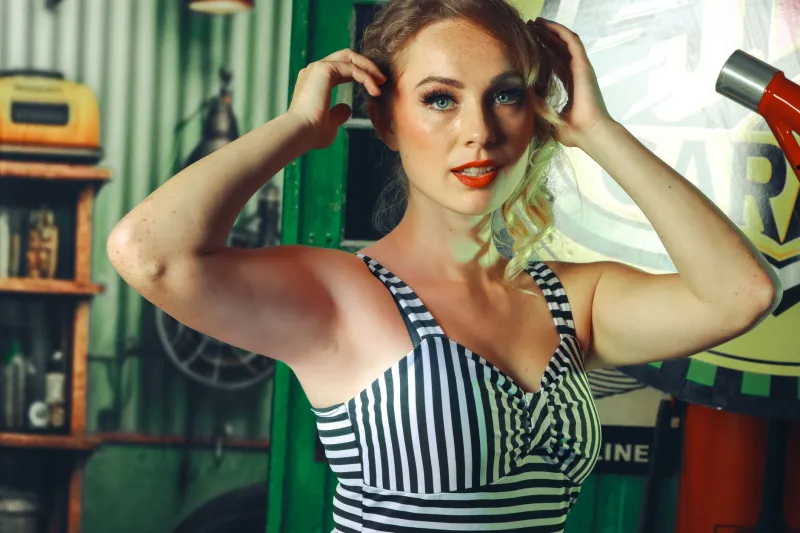
Pin-up work demands a specific skill set — the arched-back pose held for minutes at a time, the eye contact that reads as playful rather than aggressive, the ability to tell a story with a raised eyebrow. Modern fashion modeling and vintage pin-up work share a bloodline, but they're different animals.
Several models we spoke with described the shoots as empowering in a way that surprised them. "I expected it to feel like a costume," one said. "It felt more like a language. Once you learn it, you can say things with your posture that you can't say out loud."
That's not nostalgia talking. That's technique.
Why Calendars Still Matter in a Swipe Culture
Here's the uncomfortable truth about digital imagery: it's disposable by design. You scroll past a thousand images an hour and remember none of them.
A calendar can't be scrolled past. It hangs in a garage, a workshop, a kitchen. It becomes furniture in someone's life. And unlike an algorithm, a calendar doesn't change based on what you clicked last week — it just shows up every morning, doing its job.
In a strange way, the pin-up calendar is one of the last forms of media that respects your attention instead of hijacking it.
The New Generation
The most encouraging sign for this niche? Young people are finding it.
Print shops report growing orders from customers under 30 — people who grew up entirely digital and are discovering, firsthand, why physical media hits different. Vintage car clubs order custom calendars featuring local models. Veterans' organizations commission tribute editions. Small businesses use them as promotional pieces that customers actually keep.
The form isn't surviving on sentimentality. It's surviving because it works.
Every Day of the Year
There's a reason our name is what it is. Pin-up glamour was never meant to be a special occasion — it was built for the everyday. A smile on a lunch break. A wink over a workbench. Something beautiful hanging on the wall of an ordinary room.
The studios and print shops keeping the calendar tradition alive understand that better than anyone. They're not preserving a museum piece. They're running a living business, making living art, for people who still believe a year is better when it's got twelve gorgeous months on the wall.
Here's to the next print run.