Dressed Against the Algorithm: Why Pin-Up Style Is the Sharpest Form of Pushback Right Now
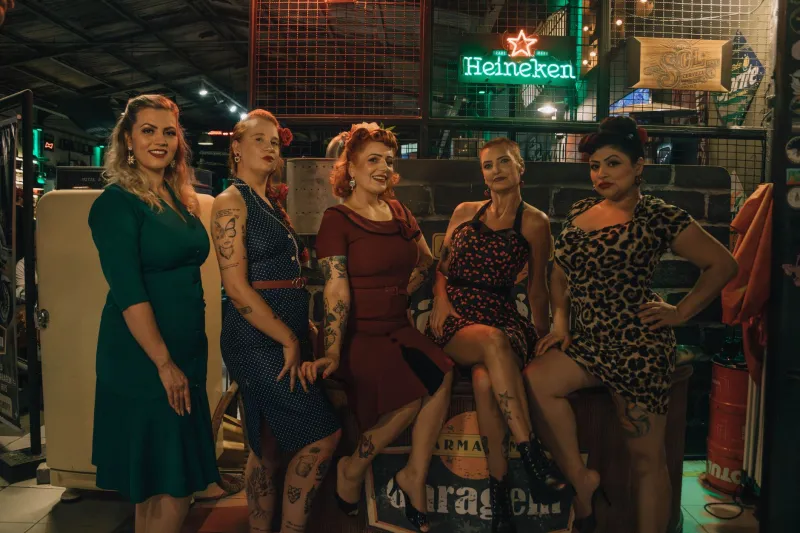
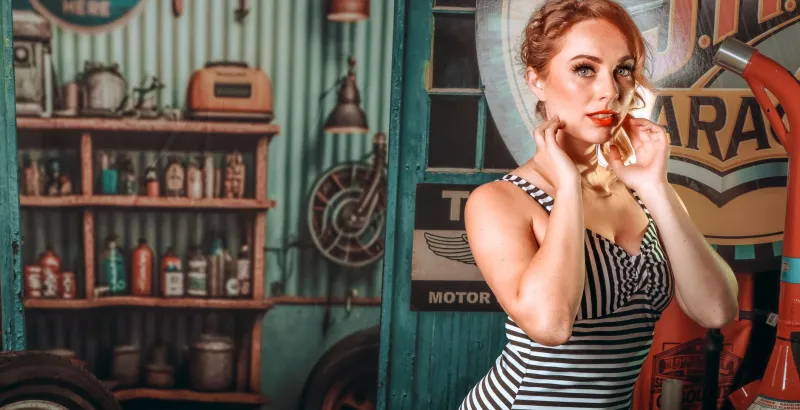
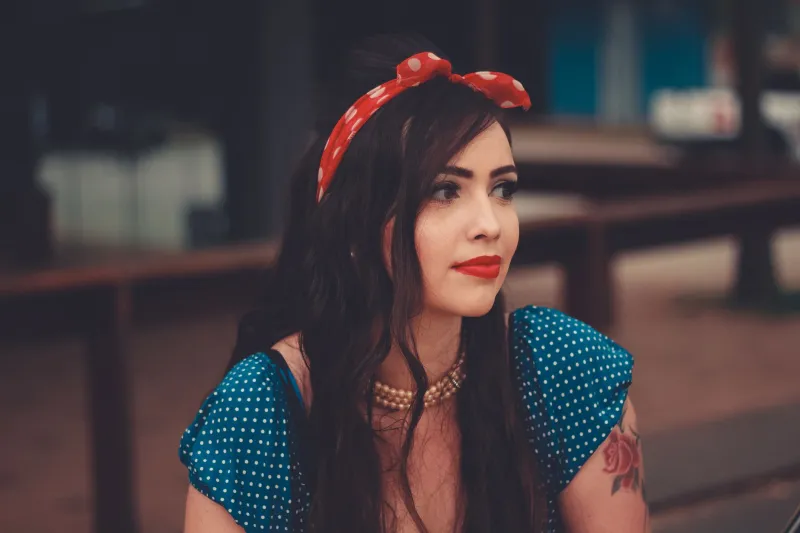
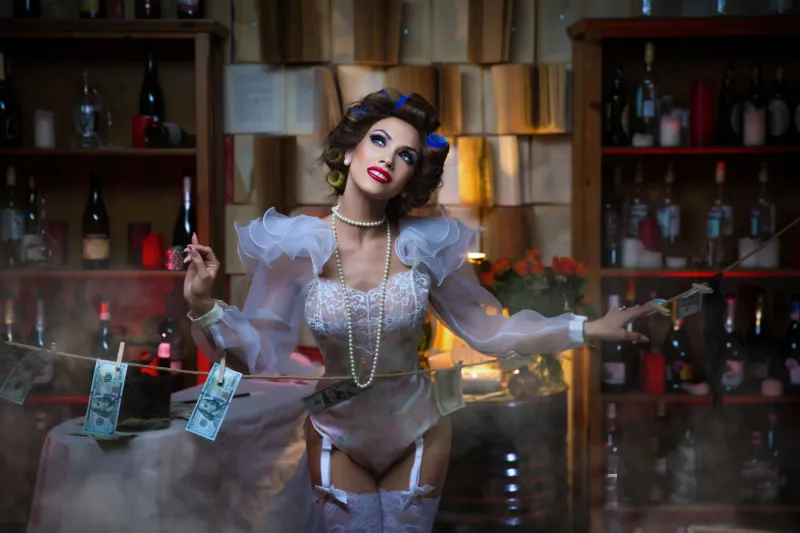
Somewhere between the third microtrend of the month and the fifth "must-have" capsule collection dropped by a fast-fashion giant, something snapped. Not loudly — no manifesto, no hashtag campaign. Just a quiet, deliberate pivot toward seamed stockings, cinched waists, and the kind of red lip that doesn't need a filter to look good. Vintage pin-up style, long dismissed as costume-y nostalgia, has become one of the most genuinely subversive aesthetic choices a woman in 2025 can make. And the reasons why go a lot deeper than a love of polka dots.
The Disposable Beauty Machine and Why It's Exhausting
Let's be honest about what modern beauty culture is actually selling. It's not confidence or self-expression — it's churn. The average fast-fashion retailer drops new "collections" weekly. Beauty brands launch limited-edition palettes timed to a 72-hour hype window before the next one rolls out. Social media algorithms reward novelty above everything else, which means yesterday's aesthetic is already dead on arrival.
The result? A generation of women who've spent years chasing a moving target, spending real money on trends that have an expiration date shorter than a carton of milk. The psychological toll is real. Studies on social media use and body image consistently show that the more women engage with trend-driven content, the worse they tend to feel about their own appearance. You're not falling behind on style — you're being engineered to feel that way.
Enter the pin-up paradox.
Choosing Timeless Is a Political Act
When a 24-year-old in Austin decides to build her wardrobe around 1950s silhouettes instead of whatever's trending on her For You page, she's doing something that looks simple on the surface but is actually pretty radical. She's opting out. She's saying that her style identity doesn't need to be refreshed every quarter, that beauty doesn't have an expiration date, and that she — not an algorithm — gets to decide what looks good on her body.
That's not nostalgia. That's agency.
The vintage pin-up aesthetic, at its philosophical core, was always about deliberate self-presentation. The women who embodied it — from the studio-era models who posed for Alberto Vargas to the working-class women who pinned calendar images to their lockers — understood something about the power of a crafted image. You chose your silhouette. You chose your shade of red. You put in the time to get the curl right. In a culture that's currently selling "effortless beauty" as the highest compliment (which, let's note, still requires tremendous effort — just invisible effort), there's something genuinely refreshing about an aesthetic that's openly, proudly constructed.
Gen Z Didn't Discover This by Accident
The generational shift toward vintage aesthetics isn't random. Gen Z, more than any cohort before it, grew up fully inside the content machine. They know what an algorithm wants. They've watched trends get manufactured, go viral, and get buried in real time. That kind of media literacy breeds a specific kind of fatigue — and a specific kind of hunger for something that feels real, considered, and durable.
Thrift culture, cottagecore, dark academia, and the broader resurgence of vintage aesthetics all tap into the same impulse: a desire for style that has roots, that connects to something larger than last Tuesday's trending audio. Pin-up, with its rich visual history, its ties to wartime American identity, its decades of cultural weight, offers exactly that kind of depth. You're not just wearing a look — you're wearing a lineage.
Millennials, meanwhile, bring their own flavor of disillusionment to the table. Many came of age during the early aughts, survived the low-rise jean era, and watched "indie sleaze" and "Y2K revival" get strip-mined by fast fashion within months of gaining traction. The appeal of an aesthetic that predates the content economy — that existed before brands could co-opt it in a single product drop — is enormous.
The Body Politics Nobody's Talking About
Here's something worth sitting with: the pin-up aesthetic celebrates curves. Enthusiastically. The hourglass silhouette, the emphasis on hips and bust, the foundation garments designed to shape and support rather than flatten — all of it runs directly counter to the body ideals that have dominated mainstream fashion for the last three decades.
Choosing to dress in a tradition that wasn't built around a size-zero framework is, for a lot of women, quietly liberating. The high-waisted shorts that smooth and lift, the structured bra that creates shape rather than minimizing it, the skirt that swirls around actual hips — these aren't just style choices. They're a reorientation of the relationship between clothing and body. The clothes work with you, not against you.
That's a different philosophy entirely from the one fast fashion operates on, which largely assumes a single aspirational body type and produces everything else as an afterthought.
Slowness as Resistance
There's a practical dimension to this rebellion that doesn't get enough credit: vintage-inspired dressing is, almost by definition, slow fashion. Quality reproduction pieces cost more upfront. Actual vintage finds require hunting. Learning to do your own victory rolls or applying a precise cat eye takes practice. None of it fits the instant-gratification model that the modern retail ecosystem runs on.
And that slowness? It's part of the point. When you spend an afternoon tracking down the right pair of Cuban-heel stockings, or you finally nail the winged liner after weeks of practice, you've invested something in your appearance that a next-day delivery can't replicate. The result feels earned. It feels like yours.
That sense of ownership — of a style identity that you built deliberately rather than assembled from whatever the algorithm served up — is exactly what a lot of women are hungry for right now.
The Bombshell Isn't a Throwback. She's a Blueprint.
It would be easy to frame the pin-up revival as pure nostalgia, a retreat into a simpler imagined past. But that reading misses what's actually happening. The women rocking bullet bras and swing skirts in 2025 aren't pretending it's 1952. They're taking the most compelling parts of a visual tradition — the intentionality, the confidence, the unapologetic femininity, the craftsmanship — and deploying them in a present-day context that desperately needs all of those things.
The pin-up aesthetic was never about compliance. Even in its original form, it was about a woman presenting herself on her own terms, with full awareness of her own power. That's not a dated idea. In a culture engineered to make women feel perpetually behind, perpetually inadequate, and perpetually in need of whatever's new — it might just be the most current idea going.
So the next time someone calls your red lip "retro" like it's a mild insult, take it as the compliment it is. You're not behind the times. You're ahead of them.