Borrow Their Backbone: How Pin-Up Icons Can Rewire the Way You Carry Yourself
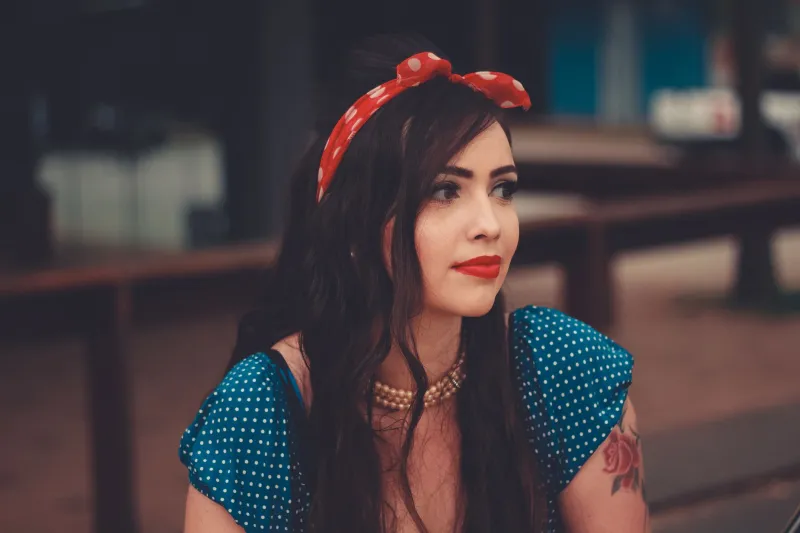
There's something almost jarring about looking at a classic pin-up image from the 1940s or '50s and feeling — not nostalgia exactly — but recognition. A kind of knowing. The woman in the frame isn't asking permission. She's not apologizing for taking up space. She's not waiting to be told she looks good before she believes it herself. She already knows.
That quality — that bedrock self-assurance — is exactly what a growing number of contemporary women are chasing. And increasingly, they're finding it not in a wellness app or a motivational thread, but in the unapologetic attitude of pin-up culture's most iconic figures.
Confidence Wasn't Accidental — It Was Practiced
Here's the thing people get wrong about golden age pin-up icons: they assume the confidence was effortless, some genetic gift handed down alongside cheekbones and an hourglass figure. But dig into the histories of women like Bettie Page, Jayne Mansfield, or Tempest Storm, and a different picture emerges entirely.
These were women who, in many cases, came from difficult backgrounds, navigated genuinely hostile industries, and still managed to project an almost magnetic sense of self-possession. Page grew up in poverty in Nashville. Mansfield was relentlessly underestimated by Hollywood despite holding a sky-high IQ. Storm built a decades-long career in burlesque at a time when that world offered women almost zero institutional protection.
What they shared wasn't a charmed life. It was a decision — repeated daily — to present themselves as women who knew their own worth. Psychologists would recognize this as behavioral confirmation: act the part long enough and with enough conviction, and the internal belief tends to follow. Pin-up icons were essentially doing cognitive behavioral work before the terminology existed.
The Strategic Art of Owning the Room
Modern women who've studied pin-up culture closely — photographers, performers, vintage enthusiasts, and everyday fans — often point to something specific: the way these icons understood presence as a skill rather than a personality trait.
Presence, in the pin-up world, wasn't just about how you looked. It was about how you entered a room, how you held eye contact, how you made the person across from you feel like the only one in the space. It was deliberate. Practiced. And crucially, it had nothing to do with conventional beauty standards, because the women who radiated the most presence weren't always the ones who fit the narrowest definitions of attractiveness. They were the ones who committed fully to themselves.
This is a lesson that translates almost directly to modern professional and social contexts. Research in organizational behavior consistently shows that perceived confidence — not competence alone — shapes how people are evaluated in workplaces, negotiations, and social hierarchies. The pin-up icons were, in a sense, ahead of the curve on personal branding.
Self-Acceptance Wasn't a Trend — It Was Survival
One of the more radical things about classic pin-up culture, viewed through a contemporary lens, is how it celebrated body diversity long before that phrase entered the mainstream conversation. Yes, certain looks dominated — the hourglass silhouette, the victory roll, the red lip — but within those aesthetic codes, there was genuine range. Women of different sizes, backgrounds, and personalities all found footing in the pin-up world.
More importantly, the culture demanded that women own whatever they brought to the table. Insecurity wasn't a viable strategy. The camera caught everything, and hesitation read as weakness. So performers and models developed a relationship with their own bodies that was, by necessity, more accepting and more functional than what many women are socialized into today.
Contemporary pin-up enthusiasts — and there are millions of them across the US, from casual vintage lovers to dedicated performers — frequently describe their engagement with the aesthetic as transformative in exactly this way. The ritualistic nature of the style (the hair setting, the makeup application, the careful selection of a silhouette) creates a kind of intentional relationship with the self that daily life rarely offers. You're not just getting dressed. You're deciding who you are today.
Femininity as Power, Not Compromise
There's a persistent cultural narrative that positions femininity and power as opposites — that to be taken seriously, a woman must minimize the parts of herself that read as traditionally feminine. Pin-up culture has always pushed back against that framing, sometimes quietly and sometimes loudly.
The icons of the golden age were unapologetically feminine and simultaneously in control of their image, their earnings (where possible), and their public persona. They used their femininity as a tool — not because they were manipulative, but because they understood that strategic self-presentation is simply how power operates in social environments. Men in every era have understood this intuitively. Pin-up women codified it.
For modern women navigating spaces that still carry residual bias — corporate environments, creative industries, social media platforms — this reframing can be genuinely useful. Owning your sexuality, your femininity, or your aesthetic choices doesn't undercut your authority. Performed with conviction, it reinforces it.
Building the Mindset, One Day at a Time
So what does it actually look like to borrow from this playbook in a practical sense? A few principles emerge pretty consistently from women who've integrated pin-up philosophy into their daily lives:
Lead with intention. Before any significant interaction — a presentation, a date, a difficult conversation — take a moment to decide how you want to show up. Pin-up icons didn't stumble into a room. They arrived.
Treat self-presentation as self-respect. This doesn't mean you need to wear a full face of vintage makeup to run errands. It means making deliberate choices about how you present yourself rather than defaulting to whatever requires the least effort. The ritual matters.
Separate your worth from external validation. This is perhaps the hardest one, and the most essential. The pin-up icons who endured — who built real careers and real legacies — were the ones who had an internal anchor that didn't depend entirely on applause. Develop yours.
Own the whole package. Stop apologizing for the parts of yourself that don't fit a single neat narrative. The women who defined pin-up culture were contradictions: playful and serious, vulnerable and powerful, accessible and untouchable. You can be all of those things too.
The Lasting Lesson
Pin-up culture, at its best, was never just about aesthetics. It was about a particular kind of freedom — the freedom to be seen fully, on your own terms, without flinching. That's not a vintage idea. It's a timeless one.
And in a moment when women are navigating more competing pressures and expectations than perhaps any previous generation, the quiet confidence of a Bettie Page or a Tempest Storm feels less like nostalgia and more like a roadmap. The destination hasn't changed. Only the shoes have.